Financial Modelling & Techno-Economic Analysis
CapEx/OpEx assessment, NPV, IRR and LCOE modelling with Monte Carlo sensitivity analysis and lender-ready technical inputs for renewable projects.
A renewable project lives or dies on its economics. Fluxiss connects engineering reality to the financial model so the returns presented to investors and lenders reflect the energy, availability, degradation, cost, schedule, and operating constraints the plant can actually deliver.
Our techno-economic models support early screening, technology selection, investment committee approval, financing, bid strategy, and operating-plan updates. Every important assumption is sourced, version-controlled, and linked to a technical basis rather than hidden inside a spreadsheet.
What We Model
- CapEx / OpEx Assessment - bottom-up cost build-ups benchmarked against real market data.
- NPV, IRR & LCOE Modelling - full project economics under your financing structure.
- Sensitivity & Scenario Analysis - Monte Carlo simulation and tornado charts that show which variables actually move returns.
- Financial Model Technical Inputs Package - yield, degradation, availability, and cost inputs formatted for your model or your lender's.
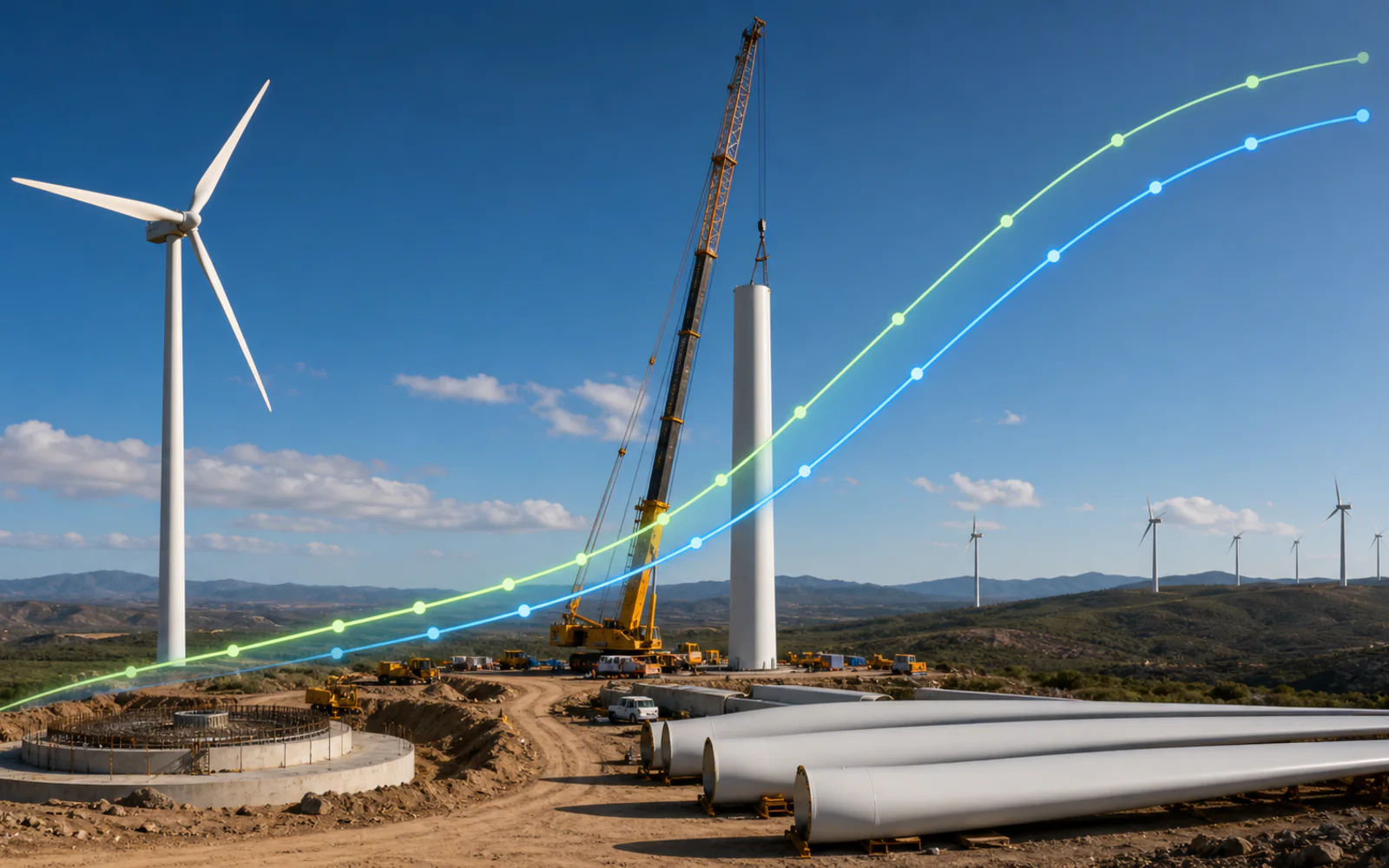
An Investment Case Built From Engineering Inputs
We begin with project configuration, resource data, site constraints, technology selection, grid limits, construction schedule, contracting strategy, financing assumptions, tax treatment, and target operating life. Technical inputs such as gross yield, losses, degradation, availability, curtailment, auxiliary consumption, and replacement intervals are reconciled before cash flow is calculated.
The capital-cost build-up can include development, equipment, civil and electrical balance of plant, interconnection, owner's costs, contingency, escalation, duties, logistics, commissioning, and financing-period costs. Operating costs are separated into fixed, variable, scheduled, and event-driven categories so the model can respond correctly when production or asset condition changes.
- Solar, wind, BESS, hybrid, and multi-site portfolio models.
- Pre-tax and post-tax project and equity cash flows.
- Debt sizing, coverage ratios, reserve accounts, and covenant cases where required.
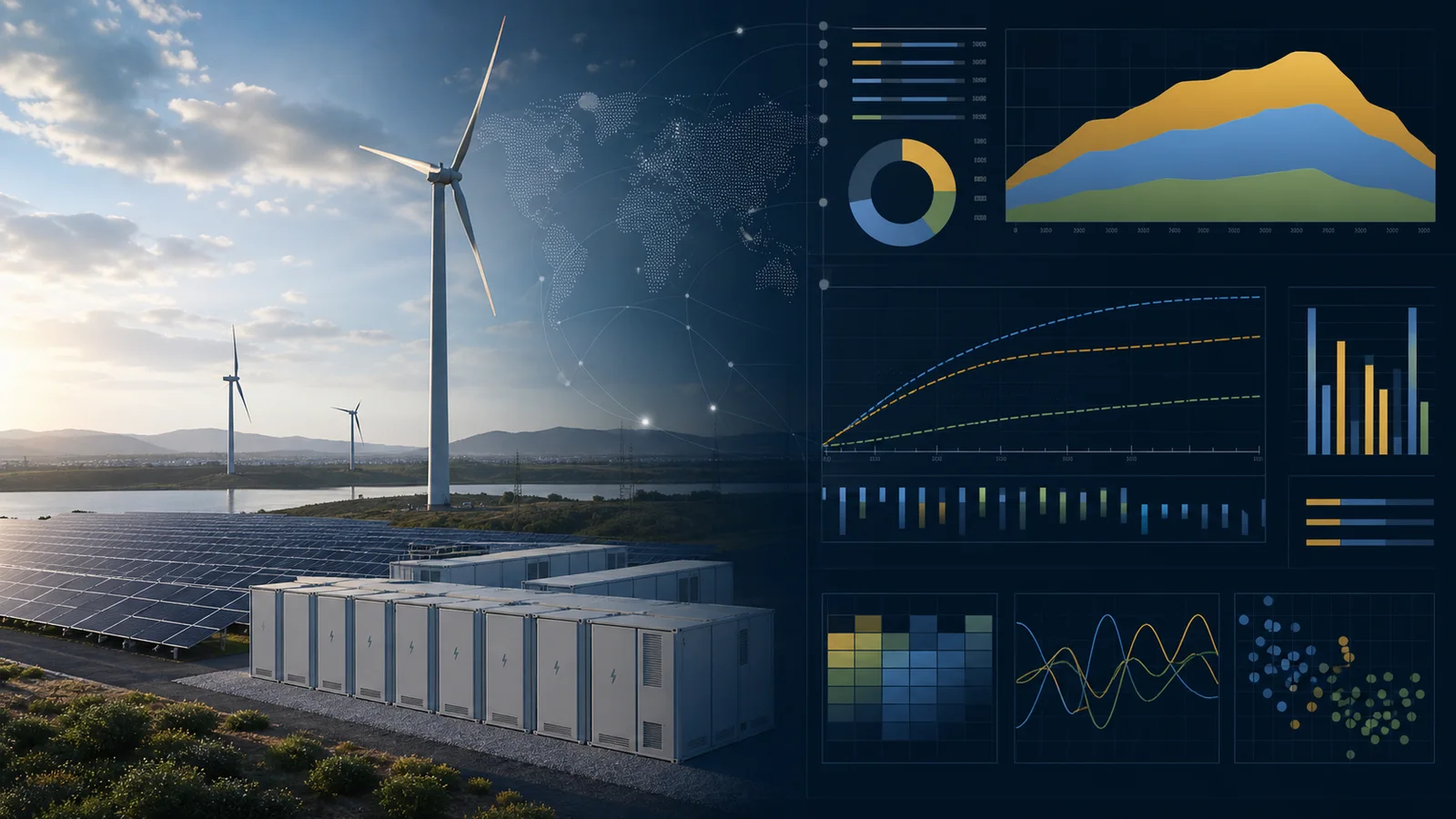
Energy Yield, LCOE and Scenario Modelling
A single annual energy value cannot describe project uncertainty. We model P50, P75, P90, or other probability cases as appropriate, then apply loss factors, degradation, availability, grid constraints, and dispatch rules consistently through the operating period. For storage, the model can represent charging source, round-trip losses, cycling limits, state-of-charge windows, market dispatch, and augmentation.
Levelized cost of energy is calculated from the same lifecycle basis as the cash-flow model. This lets decision-makers compare technologies and configurations without mixing nominal and real costs, inconsistent production assumptions, or different asset lives.
- Base, upside, downside, delay, curtailment, and equipment-underperformance cases.
- Sensitivity tables, tornado charts, break-even values, and Monte Carlo distributions.
- NPV, project IRR, equity IRR, payback, LCOE, and revenue-at-risk outputs.
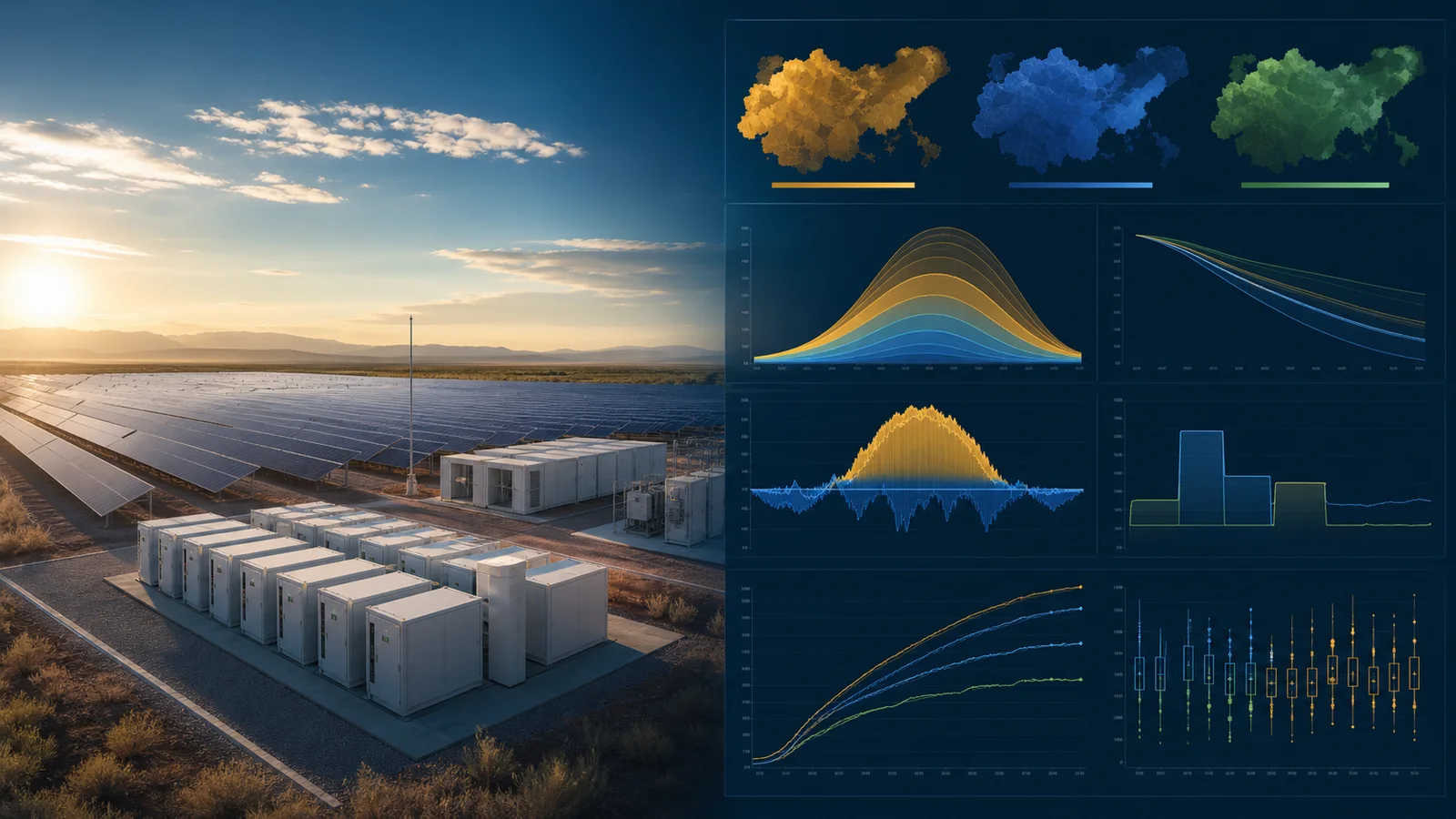
Lifecycle CapEx, OpEx and Replacement Planning
Long-life renewable assets require more than an EPC price and a yearly maintenance allowance. We schedule inverter replacements, major wind-turbine components, battery augmentation, module degradation, transformer maintenance, insurance, land costs, network charges, and decommissioning or residual value in the years when they are expected to occur.
This lifecycle view exposes false economies. A lower-cost technology may create earlier replacement, higher downtime, weaker efficiency, or more expensive service requirements. Alternative strategies are compared on discounted total cost and revenue impact, giving procurement and engineering teams a common basis for selection.
The output is a transparent assumption book, auditable financial model, scenario dashboard, and decision summary with the variables that matter most clearly identified. Build Your Project Economics With Us
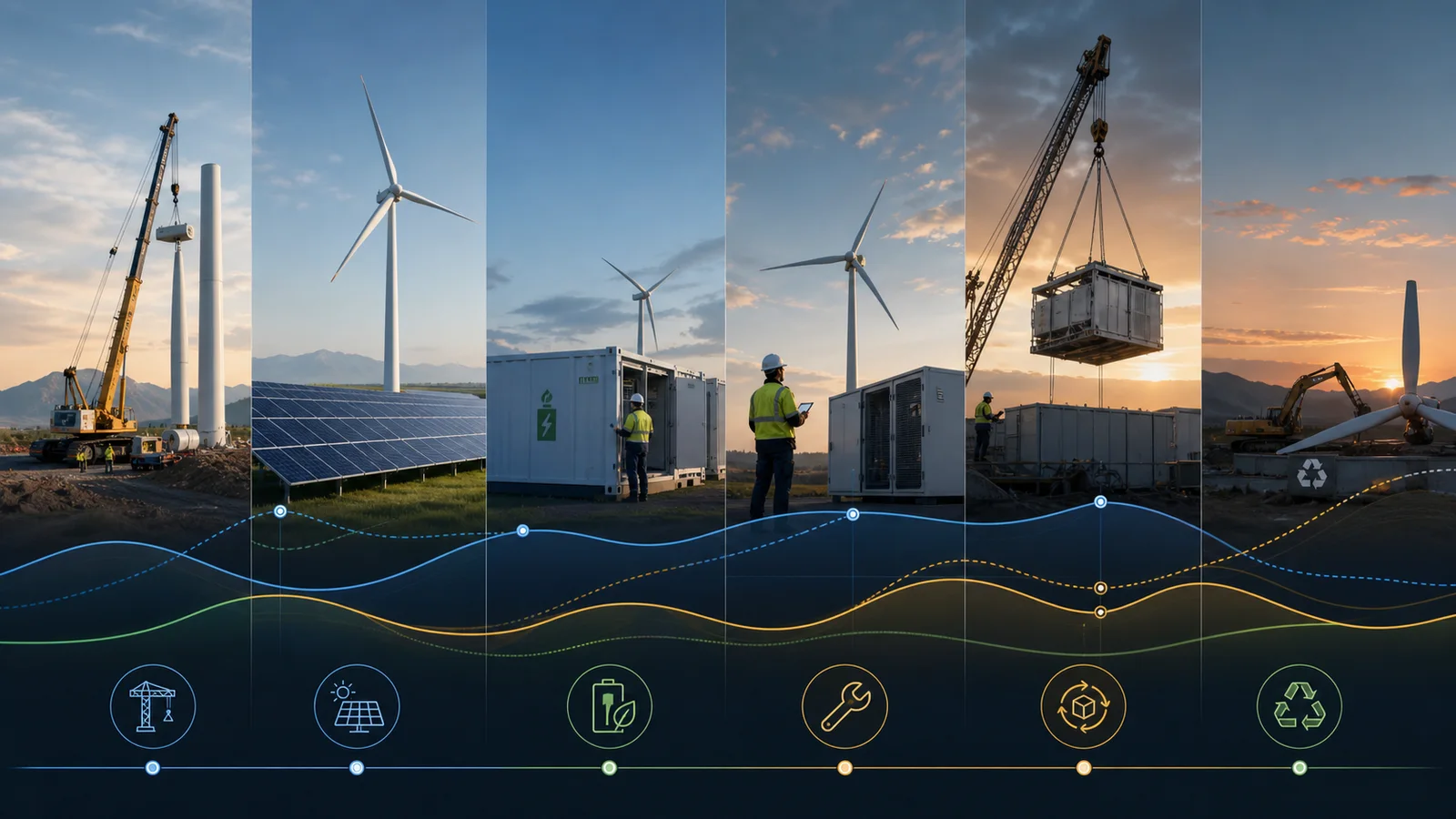
Sensitivity and Downside Testing
A bankable model must explain what happens when the base case does not occur. We test energy yield, price, curtailment, degradation, availability, CapEx, OpEx and replacement timing individually and in combined downside cases.
The outputs identify break-even conditions, covenant pressure and the assumptions that deserve the most due diligence, giving decision-makers a transparent view of resilience as well as return.

Let's Build Something Great Together.
Partner with Fluxiss for engineering that holds up - under pressure, under load, under scrutiny.