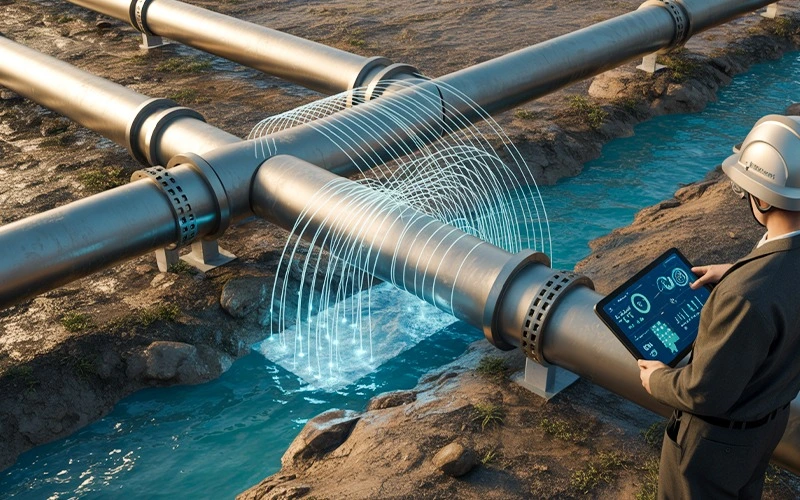
Modern pipelines are increasingly integrated with smart pipeline monitoring systems, enabling real-time tracking and proactive maintenance. Understanding how does pipeline leak detection work, the lifecycle cost of leak detection systems , and the environmental impact of water loss is crucial for engineers and utility managers aiming to create resilient and sustainable water networks. In this blog, we delve into the technologies, benefits, and strategies that define successful water pipeline leak detection programs in the USA.
Water Pipeline Leak Detection Systems
What Is a Pipeline Leak Detection System?
A pipeline leak detection system uses a combination of sensors, data analytics, and monitoring tools to identify leaks within water distribution networks. Technologies include:
- Acoustic sensors to detect sound anomalies from leaks
- Pressure and flow monitoring for sudden changes
- Fiber optic pipeline monitoring for continuous leak detection
These systems help utilities reduce water distribution leaks , lower maintenance costs, and improve pipeline efficiency USA . Advanced solutions integrate IoT devices to provide smart infrastructure USA capabilities, allowing engineers to respond quickly to potential issues.
How Does Pipeline Leak Detection Work?
Essentially, sensors detect variations in flow, pressure, or acoustic signals that indicate a potential leak. Data is transmitted in real-time to a monitoring center, where analytics software identifies the exact location and severity of leaks. Methods include:
- In-line inspection using smart devices
- External acoustic sensors on pipelines
- Fiber optic cables for long-distance continuous monitoring
This proactive approach ensures water conservation in piping systems and prevents costly emergency repairs.
Environmental Impact of Water Loss
Water Loss Environmental Impact
Leaks in water pipelines contribute to significant environmental and financial consequences. Water loss environmental impact includes:
- Wasted energy due to pumping and treatment of lost water
- Increased greenhouse gas emissions from additional energy use
- Depletion of freshwater resources, especially in drought-prone regions
By addressing leaks early, utilities reduce their carbon footprint of leaking pipelines , contributing to broader sustainability goals. According to research, U.S. gas and water pipelines leak substantial amounts annually, equivalent to millions of cars’ emissions.
Benefits of Sustainability Through Leak Detection
Implementing leak detection and smart pipeline monitoring improves both environmental and operational efficiency:
- Minimizes unnecessary water pumping and energy usage
- Extends the lifecycle of water infrastructure
- Enhances regulatory compliance and public trust
Lifecycle Cost of Leak Detection Systems
Investment vs Savings
The lifecycle cost of leak detection systems includes installation, operation, maintenance, and eventual replacement. While upfront costs may appear significant, studies show long-term savings through reduced water loss, fewer emergency repairs, and extended pipeline life. For instance, rural North Texas communities reduced water distribution leaks by 42% using advanced detection tools.
Cost-Benefit Analysis
- Installation of fiber optic pipelines and IoT sensors
- Reduced emergency repair and replacement expenses
- Energy savings from optimized water distribution
Investing in pipeline leak monitoring is not just about compliance; it’s a strategic move for operational efficiency and sustainability. For firms interested in comprehensive solutions, Fluxiss Services offers end-to-end pipeline monitoring and engineering support.
Smart Pipeline Monitoring
Fiber Optic Pipeline Integration
Fiber optic pipeline technology provides continuous real-time monitoring, detecting even minor leaks across extensive networks. Benefits include:
- Real-time data and alerts
- Long-term durability and low maintenance
- Integration with smart infrastructure and analytics platforms
Leak Monitoring Technologies
Modern leak monitoring technologies combine sensors, AI analytics, and predictive maintenance. Features include:
- Predictive alerts to prevent major failures
- Data-driven decision-making for water conservation in piping systems
- Integration with other smart infrastructure USA initiatives
These tools transform traditional pipelines into intelligent networks capable of proactive management, reducing both environmental impact and operational costs.
Enhancing Pipeline Efficiency USA
Strategies for Engineers
To improve pipeline efficiency USA , engineering firms should:
- Adopt advanced l eak detection systems
- Implement smart pipeline monitoring solutions
- Conduct regular maintenance and infrastructure upgrades
- Use fiber optic pipelines for long-term, continuous monitoring
These strategies ensure sustainable water management, lower lifecycle costs, and compliance with evolving regulations
Role of Water Conservation in Piping Systems
Water conservation in piping systems extends beyond reducing leaks. Effective practices include:
- Regular pipeline audits
- Pressure optimization
- Integration with smart meters and monitoring
By combining conservation efforts with leak detection, utilities improve system resilience and reduce water distribution leaks effectively.
Conclusion: Unlocking Sustainable Water Management with Smart Leak Detection
Investing in water pipeline leak detection and smart pipeline monitoring is essential for sustainable, cost-effective water management in the USA. Reducing water loss not only minimizes the carbon footprint of leaking pipelines but also improves pipeline efficiency and lowers lifecycle costs. Engineering firms like Fluxiss provide comprehensive solutions for pipeline monitoring, fiber optic pipelines, and smart infrastructure integration, helping utilities achieve long-term sustainability. For tailored engineering support, explore Fluxiss Services .
For expert pipeline engineering solutions and smart monitoring systems, contact Fluxiss today.
Frequently Asked Questions
Water pipeline leak detection is the process of identifying and locating leaks in water distribution systems using sensors, analytics, and monitoring tools. It helps reduce water loss, lower operational costs, and minimize environmental impact.
Fluxiss Editorial is part of the Fluxiss engineering team, delivering sustainability scopes across the USA, UK, UAE and Europe.



Let's Build Something Great Together.
Partner with Fluxiss for engineering that holds up - under pressure, under load, under scrutiny.