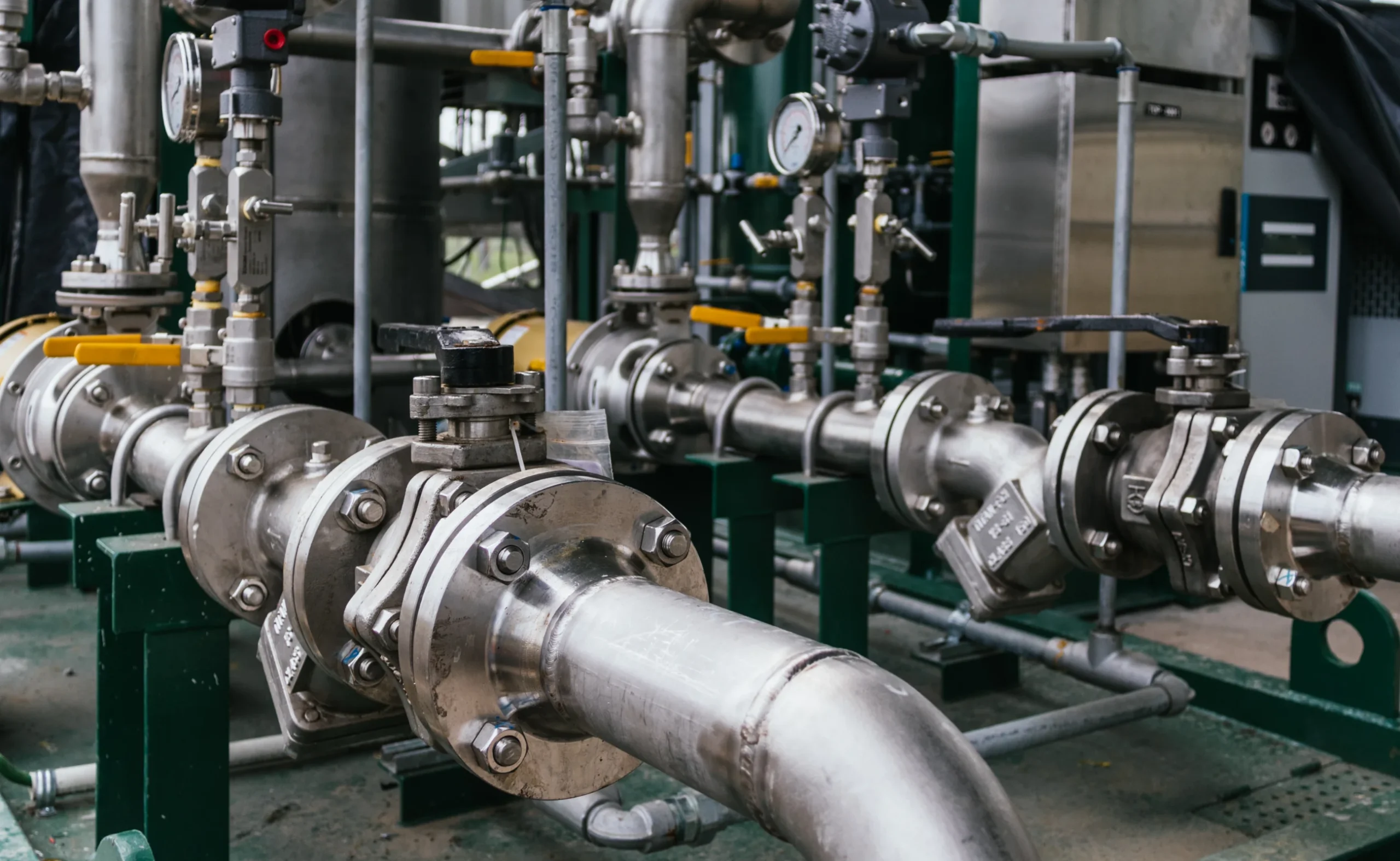
In this post, we are going to walk you through the piping design mistakes we studied, heard about in the field, and researched across USA and UK standards . This isn’t just theory; it’s about keeping your project on track and your site safe.
The Expansion Trap: Thermal Expansion Problems
One of the biggest piping engineering mistakes is forgetting that metal moves. We had a case study about a facility in Chicago where the pipes actually tore themselves off the wall because the engineer didn’t account for heat.
When fluid gets hot, the pipe grows. If you don’t give it a place to go, it creates massive pressure on your joints.
- The Error: Designing a perfectly straight, rigid line between two fixed points.
- The Fix: Use expansion loops or offsets. This is a core piping design best practice .
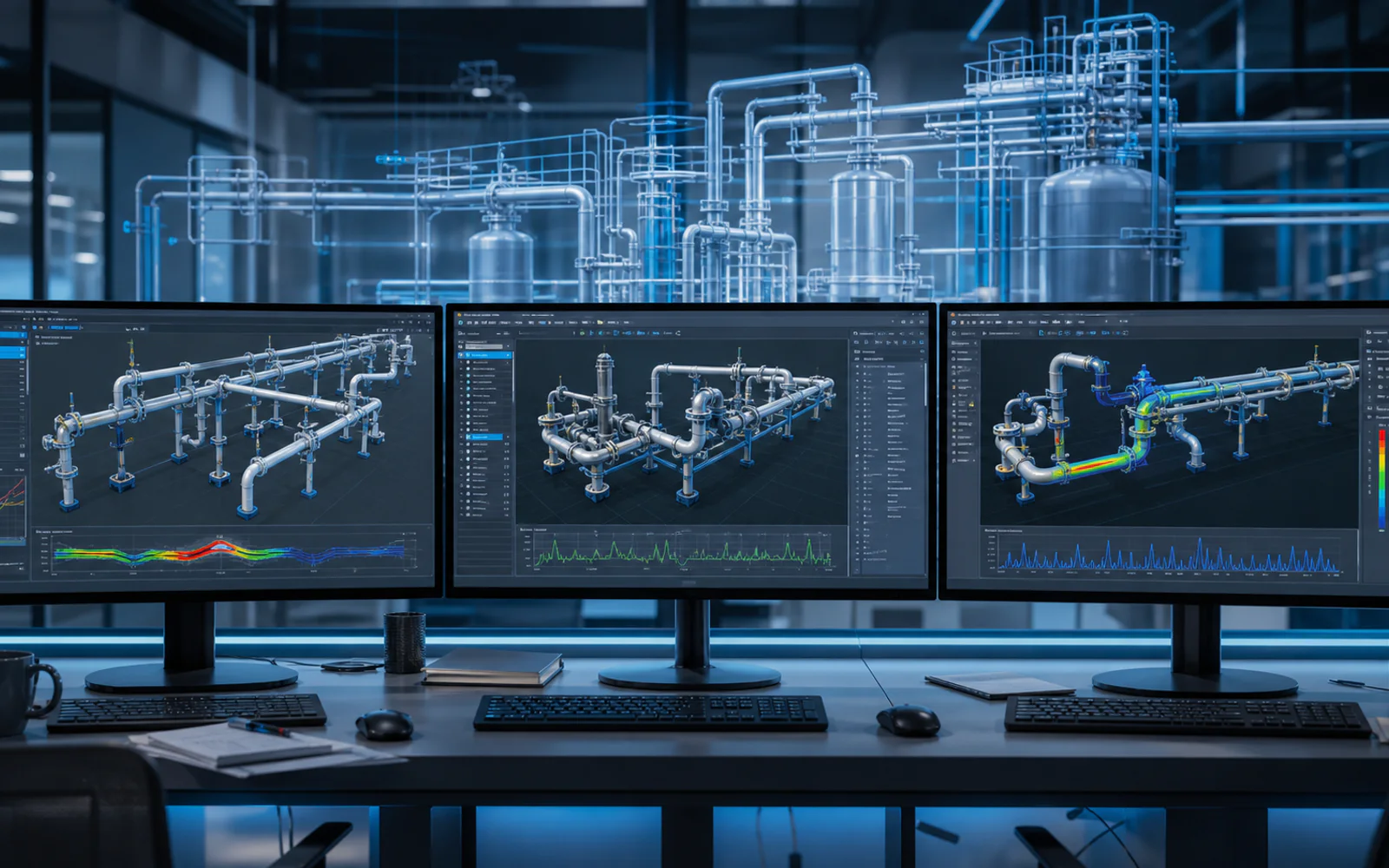
Pro Tip: In 2026, we use digital twins to simulate these heat cycles before a single bolt is tightened.
Pump Suicide: Common Piping Design Errors at the Suction
We heard so many stories about “cavitation.” It sounds like a complex word, but it basically means your pump is eating itself. This usually happens because of pipe routing mistakes right at the entrance of the pump.
When you bring an elbow very near to the pump suction the water becomes turbulent. It is just as though you are attempting to breathe and someone is shaking your head.
- Avoidance: You need a straight run of pipe-usually 5 to 10 times the diameter-before the fluid hits the pump.
- USA Standard Note: According to ASME B31.3 , the flow needs to be laminar (smooth) to protect the mechanical seals.
The “Clash” Nightmare: Piping Layout Design Issues
At Fluxiss , we work with clients in New York , Manchester , and Abu Dhabi . A common theme? Someone forgot to check if the pipe hits a steel beam. Industrial piping design problems often stem from 3D models where the “piping guy” didn’t talk to the “structural guy.”
We’ve seen field crews in Los Angeles having to cut and re-weld entire sections because a pipe was blocked by a ventilation duct.
- The Solution: Piping layout optimization through integrated BIM (Building Information Modeling).
The Construction Industry Institute (CII) emphasizes that automated clash detection reduces rework by up to 20%.
Forgetting the Human: Engineering Design Errors in Accessibility
We once talked to a maintenance lead in Birmingham, UK , who had to use a 20-foot ladder and a custom-made pole just to turn a single valve. That is a massive safety risk.
Piping design mistakes aren’t always about the math; sometimes they are about the people. If a worker can’t reach a valve quickly during an emergency, your design has failed.
- Best Practice: Ensure all “critical to operate” valves are between knee and shoulder height.
- UK Standard: Follow the HSE (Health and Safety Executive) guidelines for plant access and egress.
Weight and Gravity: Pipe Support Design Fails
Pipe isn’t weightless, especially when it’s full of sludge or water. We’ve seen pipe support design ignored because “the pipe is strong enough.” It isn’t.
Under-supporting a line leads to sagging. Sagging creates “pockets” where liquid gets trapped. In steam lines, this trapped water can lead to water hammer , which literally sounds like someone hitting the pipe with a sledgehammer until it bursts.
Comparison of USA and UK Piping Frameworks (2026)
Feature
USA (Fluxiss Standard)
UK / Europe Standard
Code
ASME B31.3 / B31.1
BS EN 13480
Material Ratings
ASTM / ANSI
EN 10216
Safety Regs
OSHA
HSE / PSSR
Small Bore, Big Problems: How to Avoid Piping Design Errors
We often focus on the massive 24-inch mains, but the 1-inch “small bore” pipes are where the leaks happen. These are often vibrated to death because they aren’t supported as well as the big pipes.
From research and what we seen in London refineries, small-bore piping accounts for the majority of hydrocarbon releases.
- The Fix: Treat small-bore piping with the same respect as the big stuff. Use gussets on branch connections to stop vibration fatigue.
Corrosion Under Insulation (CUI)
This is a “hidden” piping engineering mistake . You wrap a pipe in insulation to keep it warm, but water seeps in and rots the pipe from the outside in. By the time you see the leak, the whole line is gone.
- The Strategy: Use high-quality coatings under the insulation and design the “cladding” (the metal skin) to shed water effectively.
Ignoring Pipe Stress Issues in High-Pressure Systems
When you are dealing with high pressure in places like Texas or the UAE , the pipe acts like a balloon. It wants to straighten out. If your piping layout optimization doesn’t account for these “Bourdon effects,” your anchors will literally rip out of the concrete.
Designing for the Long Haul
Avoiding piping design mistakes isn’t about being perfect; it’s about being proactive. Whether you are in San Francisco , Glasgow , or Dubai , the physics of fluid dynamics doesn’t change. You have to respect thermal expansion, give your pumps room to breathe, and never forget the person who has to maintain the system five years from now.
At Fluxiss , we’ve made it our mission to study these common piping design errors so our clients don’t have to learn the hard way. Engineering is about building things that last, and that starts with a smart, stress-free piping layout.
Ready to Optimize Your Next Project?
Don’t let a simple routing error tank your budget. Let’s talk about how we can streamline your plant design.
Frequently Asked Questions
Many projects fail due to poor planning. The most frequent piping design mistakes involve ignoring thermal expansion problems and poor pump suction layouts. By following piping design best practices, you ensure safety. Always use stress analysis software to validate your routing before installation.
Fluxiss Editorial is part of the Fluxiss engineering team, delivering pipe stress scopes across the USA, UK, UAE and Europe.

Let's Build Something Great Together.
Partner with Fluxiss for engineering that holds up - under pressure, under load, under scrutiny.