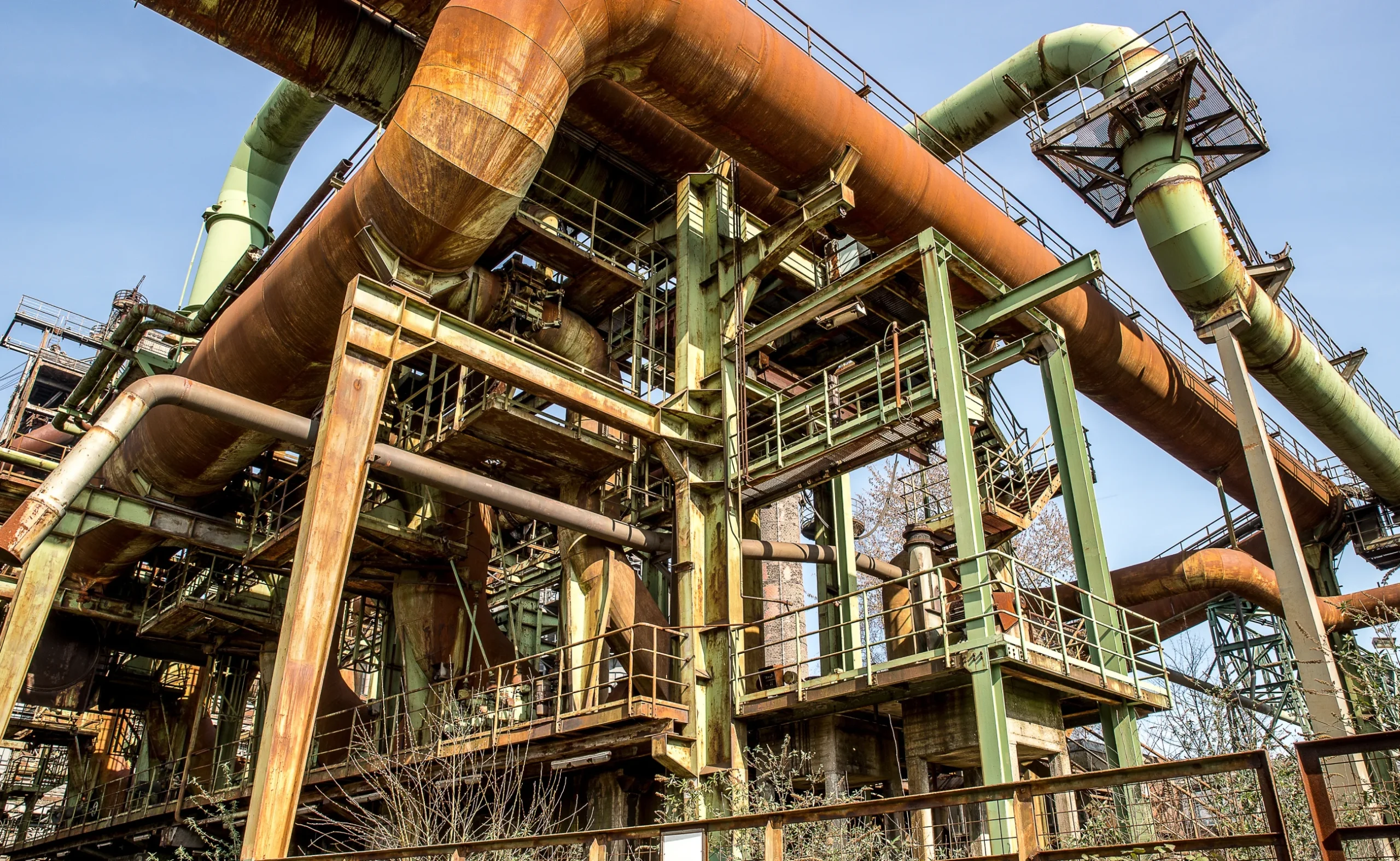
We’ve spent years looking at blue flames on stoves and industrial heaters, but it wasn’t until we started researching the guts of an oil and gas processing plant that we realized how much work goes into that simple spark. If you pull gas straight from a well in Texas or the North Sea, it’s actually a mess. It’s “wet,” it’s “sour,” and honestly, it’s a bit dangerous for pipelines.
At Fluxiss , we’ve spent the last few years helping firms in Houston , London , and Dubai build the infrastructure that cleans this mess up. We want to take you through our notes on the gas plant working principle -breaking down the natural gas processing steps without the fluff.
The “Dirty” Truth About Raw Gas
Before we dive into the gas plant design engineering specifics, you have to understand what we’re dealing with. Raw natural gas isn’t just methane. It’s a cocktail of water, H2S (which smells like rotten eggs and can be fatal), CO2, and heavy liquids like propane and butane.
If you don’t use a proper gas treatment process , those liquids will freeze and explode pipes, or the acid will eat the metal from the inside out. That’s why processing facilities are the unsung heroes of the energy world.
Phase 1: The Great Gas-Liquid Separation
The first thing we learned about how gas processing plants work is that you have to stop the “slugs.” When gas travels through miles of pipe from a field in the UAE or Oklahoma , liquids pool in the low spots. Eventually, a giant wave of liquid-a “slug”-hits the plant.
Scouring the Stream with Slug Catchers
We use a gas-liquid separation unit right at the inlet. Think of it as a massive settling tank. Gravity does the heavy lifting here. The heavy liquids (condensates and water) fall to the bottom, while the lighter gas stays on top.
If the gas separation process fails here, the rest of the plant is in big trouble. Liquids are non-compressible; if they hit a compressor, it’s game over for the hardware.
Phase 2: Sweetening the Sour Stuff
Once the big liquids are out, the gas is still “sour” because of acid gases. We had a case study on gas plant design engineering where CO2 levels were so high that they were literally thinning the pipe walls every month.
The Amine Wash
To fix this, we use a gas purification method called “Amine Sweeting.” The gas flows up through a tower while a chemical called amine flows down. The amine grabs the H2S and CO2 and carries them away. Now, the gas is “sweet.” Today, in 2026, many of our clients in the UK are capturing that CO2 in the amine unit and pumping it underground to achieve Net Zero.
Phase 3: The Dehydration Process (No Water Allowed)
Even sweet gas is humid. When that water remains in it mixes with methane to create hydrates- essentially ice crystals which do not melt at room temperature. They are able to drill a multi-million dollar pipeline in a matter of hours.
Glycol vs. Mole Sieves
Triethylene Glycol (TEG) is being utilized in most of our oil and gas processing facilities. The glycol has the effect of a water sponge. But when the plant is designed to withstand extremely low temperatures (such as the cryogenic units we are used to in Aberdeen or Qatar) we resort to Molecular Sieves. These are solid desiccant beads that get the gas so dry it’s almost “thirsty.”
Phase 4: Removing the Heavy Hitters (NGL Recovery)
This is where the money is made. Methane is great for heating homes, but Ethane, Propane, and Butane (Natural Gas Liquids or NGLs) are valuable for making plastics and fuel.
The Cryogenic Deep Freeze
To get these out, the gas processing plant process uses a “Turbo-Expander.” We drop the pressure of the gas so fast that the temperature plummets to nearly -150°F. At this temperature, the NGLs turn into liquid, but the methane stays a gas.
This gas separation process allows us to ship the “dry” methane out to the city gates of New York or Manchester , while the liquids go to a “Fractionation” train to be sold separately.
Phase 5: Compression Systems and the Final Push
The gas has lost its push (pressure) after all that cleaning and cooling! We can not simply leave it there.
Getting the Pressure Back
All gas plants working principles are based on huge compression systems. These jets squeeze the gas back to the pipeline pressure (typically about 1,000 psi). This helps to make sure the gas possesses sufficient power in order to move hundreds of miles between the processing plant and the final consumer.
Engineering Standards: What Fluxiss Follows in 2026
Regardless of which project we are working in Chicago, London or Abu Dhabi, there is a rigid set of rules of gas plant design engineering .
- We use ASME B31.3 to pipe and API 521 to act as a safety vent in the USA.
- We are in line with ISO standards and Pressure Equipment Directive (PED) in the UK and Europe.
- The largest increment has been in 2026 with the name of Electrification. Rather than burn gas to operate the plant, we operate the compressors by using renewable electricity, which reduces the carbon footprint of the plant by almost 40 per cent.
The Future of Gas Processing
It is no longer just the engineers who would want to know how gas processing plants work . With the shift towards a cleaner energy mix, these plants are transforming into technologically advanced centers which are not only going to be able to deliver energy but also capture carbon and generate clean-burning hydrogen.
At Fluxiss , we don’t just build these plants; we optimize them for the next generation of energy needs in the USA, UK, UAE, and beyond. If you need a partner who understands the “why” behind the gas plant working principle , we’re here to talk.
Frequently Asked Questions
If you don't remove liquids at the start, they can cause "slugging" which destroys downstream equipment like compressors and turbines. Gas-liquid separation requires that only gas will go through the sensitive stages of treatment, avoiding mechanical problems and guaranteeing safety of the whole oil and gas plant.
Fluxiss Editorial is part of the Fluxiss engineering team, delivering engineering scopes across the USA, UK, UAE and Europe.



Let's Build Something Great Together.
Partner with Fluxiss for engineering that holds up - under pressure, under load, under scrutiny.